

On Lehman’s Legacy
How My First Internship at Barclays Shaped My Career

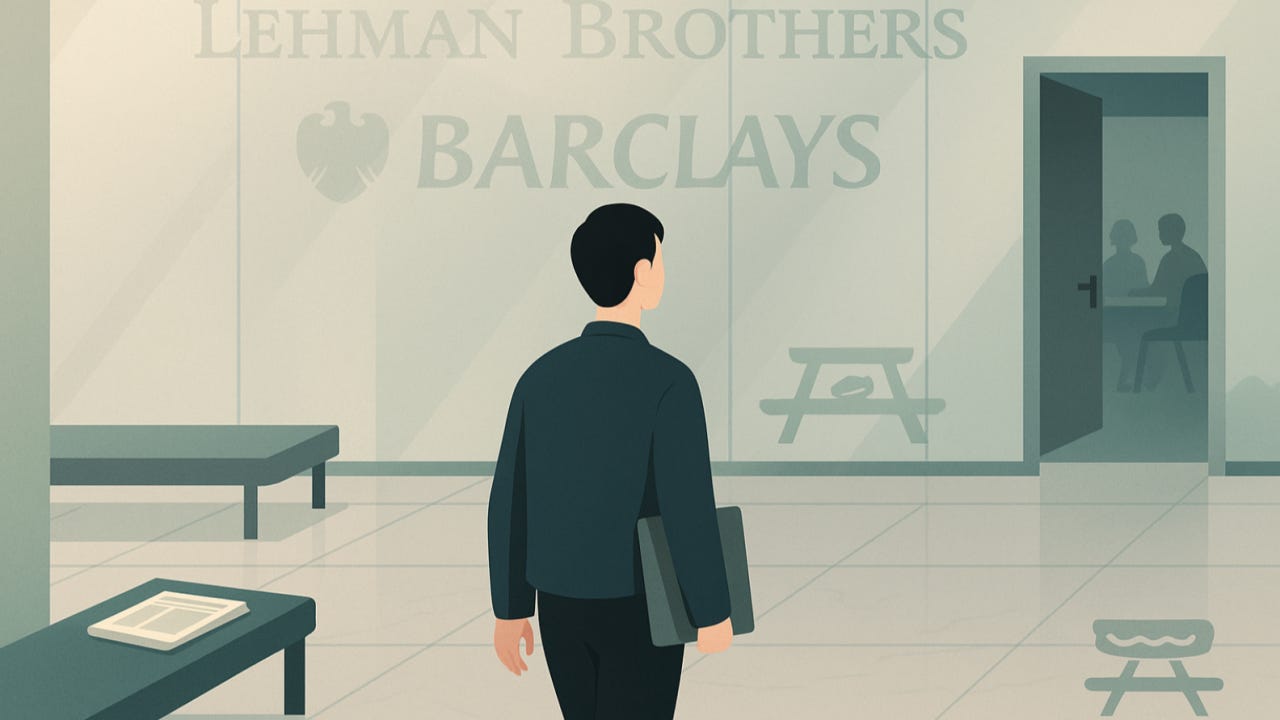
In the summer of 2015, I joined Barclays Wealth Americas as a Business Risk & Control intern, or so I thought.
A day before the program began, we got an unexpected email: our start date was delayed by 24 hours. No explanation.
When we finally arrived, HR and Internal Comms sat us down in a nice conference room, usually used for clients, and got straight to the point:
“There will be no return offers. But you’ll get great experience.”
The division we'd just joined as interns was being sold off. Not exactly the onboarding speech I'd had in mind.
By the end of that first week, I’d been quietly reassigned to the Wind-Down Office: the team managing the divestiture of Barclays’ U.S. wealth division to Stifel Financial. What I stepped into wasn’t an internship; it was a corporate postmortem.
Think of it like the FDIC team in windbreakers sent to wind down Silicon Valley Bank in 2023: less strategy, more cleanup.
Because Barclays Wealth hadn’t always been Barclays. It had once been Lehman Brothers. And many of the people around me had lived through that 2008 collapse and the Great Recession.
They didn’t speak in abstractions. They spoke of watching their company’s stock go to zero. Of colleagues crying in glass offices. Of reeling clients.
And, most vividly, of the summer picnic.
Every year, or so I was told, Lehman Brothers held a family day in Central Park. One year it poured, and the MDs grilled hot dogs in ponchos for interns and analysts.
It wasn’t just an event, it was a ritual. A signal that the firm saw itself not just as a business, but as a family.
That made the collapse all the more personal.
Here’s what I learned during my first summer internship:
1) Strategy is fragile: Your five-year plan can vanish in five days. Institutions are only as durable as the trust and clarity that sustain them. And yes... the stock can always go to zero.
2) Culture is memory: Org charts change. What endures are the stories, the rituals, the informal systems people carry with them after the logos are gone.
3) Risk is human: Spreadsheets don’t panic. People do. No model can predict the emotional tipping points that define crisis leadership.
I didn’t know it then, but that summer shaped how I'd approach my career—and why I’m comfortable in crisis, ambiguity, complexity, and leading business transformation.
The only constant in business is change: Suit up. Show up. Act with urgency, humility, and respect for institutional memory.
Collapse always feels distant... until you’ve lived through one.
In today’s high-growth, high-burn world, that lesson feels more urgent than ever.
That’s what “Lehman Legacy” means to me.
If you found this helpful, follow me for reflections on organizational transformation, leadership in ambiguity, and how we carry culture through change.